


Unions, Community Groups Rally for Labor Day Protests Against Trump and Billionaires
- Sep 1, 2025
- 2 min read

On September 1, 2025, nearly 1,000 "Workers Over Billionaires" protests erupted across all 50 states, organized by the AFL-CIO, May Day Strong, and advocacy groups like Public Citizen and Indivisible, targeting the Trump administration’s policies and billionaire influence. Demonstrators, including workers, teachers, and community activists, rallied against union-busting, cuts to public services, and immigration crackdowns, demanding a worker-first agenda.
The protests spotlighted key demands: a $30/hour minimum wage, ending subminimum wages for tipped workers, and protecting collective bargaining rights, with specific criticism of Trump’s moves to strip protections from millions of federal and care workers. Other priorities included halting immigrant scapegoating, stopping ICE profiteering, fully funding education, healthcare, housing, and Social Security, and taxing billionaires to curb corporate exploitation.
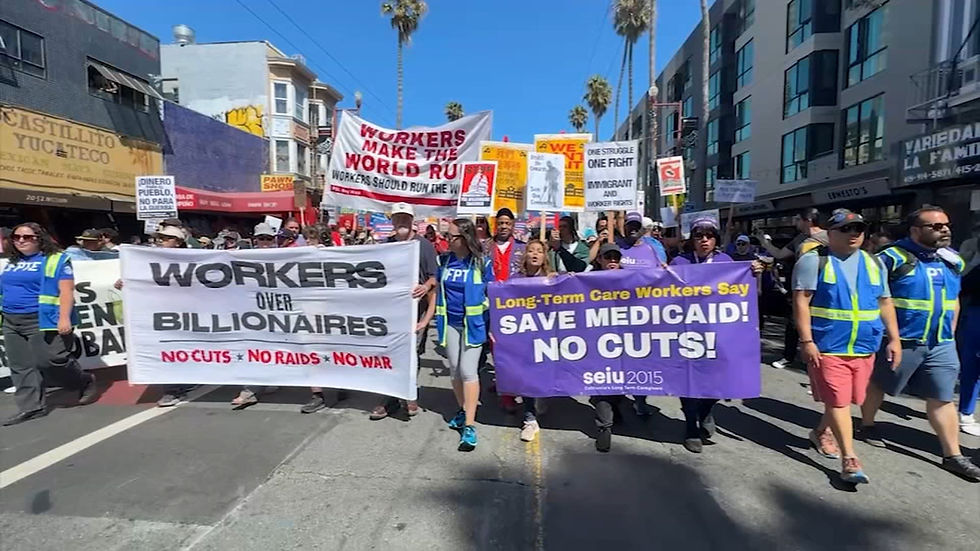
Major cities saw significant action. In New York City, protesters gathered outside Trump Tower, using taco props and Trump costumes to chant “New York is a working town” while calling for an end to subminimum wages. Chicago’s rally, joined by Mayor Brandon Johnson, denounced Trump’s threats of federal troop deployment, with thousands chanting “No troops in Chicago.” Minneapolis saw airport workers rally at MSP Airport against Delta Airlines’ anti-worker policies. In Seattle, demonstrators targeted Palantir’s offices, protesting surveillance and corporate profiteering. San Diego hosted county-wide actions demanding investment in public services over corporate wealth.
Smaller towns, from Palmer, Alaska, to Greensboro, North Carolina, also joined the movement, emphasizing opposition to the “Trump-billionaire agenda” in every community. The May Day Strong coalition, building on prior protests like “No Kings” in June, outlined five demands: protecting social safety nets, ending attacks on immigrants, fully funding public services, and holding corporations accountable.
The White House responded, with spokesperson Karoline Leavitt claiming, “We finally have a President who fights and delivers for the American worker every single day,” asserting Trump’s policies prioritize workers. However, organizers like AFL-CIO President Liz Shuler countered, emphasizing grassroots resistance to policies favoring billionaires over working families.
Events ranged from marches and rallies to picnics and a “house tour” march past billionaires’ homes in East Hampton, New York. Protests built on earlier 2025 demonstrations, including May Day and “Good Trouble Lives On” in July, signaling sustained resistance to perceived corporate and authoritarian overreach.


Comments